Distal radioulnar joint injury
1. Acute TFCC injury
1) Acute dislocations of DRUJ : Uncommon injury
Dorsal or volar, simple or complex
Dorsal dislocation is more common.
Close manipulation and reduction under anesthesia is usually successful.
Once the joint is reduced, stability must be verified.
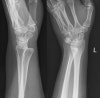
X-ray : Isolated DRUJ Dislocation
2) DRUJ injury associated with fracture, fracture-dislocation
① Ulnar styloid fracture
② Galeazzi fracture-dislocation
③ Essex-Lopresti injury(Radial head fracture-dislocation)
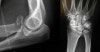
X-ray : Essex-Lopresti injury
* Careful assessment of the preoperative X-rays can indicate a possibility of DRUJ instability
① Shortening of radius>5mm relative to ulna
② Fracture of the base of ulnar styloid
③ Widening of the DRUJ interval on PA view
④ Dislocation of the DRUJ on lateral view
2. Chronic DRUJ injury
1) Chronic TFCC injury
* Chronic DRUJ Instability
Chronic DRUJ instability can result from fractures of the distal radius and ulna following inadequate treatment of malunion.
If untreated, these lead to chronic pain and disability due to stiffness, decreased grip strength, and arthritis.
Management of chronic DRUJ instability depends primarily on the underlying cause.
Correct malunion, length discrepancies first
Soft tissue reconstruction indicated in symptomatic patients in whom TFCC is irreparable & sigmoid notch incompetent.
Arthritis of DRUJ requires salvage procedures.
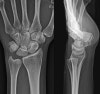
X-ray : Chronic DRUJ Instability
2) Ulnar impaction syndrome
3. DRUJ arthritis
이 글을 쓴 사람
김효섭 원장 · 침구의학과 전문의
금맥한의원 · 서울특별시 강서구 화곡로 176-4, 2층 (5호선 화곡역 3번 출구 바로 앞 2층)
전화 02-2696-3375 · 평일 09:00–21:00 (점심 13:00–14:00) · 토·일·공휴일 09:00–16:00 (점심시간 없음)
이 글은 일반적인 건강 정보를 다루며 개별 진료를 대신하지 않습니다. 증상과 치료 방법은 사람마다 다르므로 진찰 후 판단이 필요합니다.